
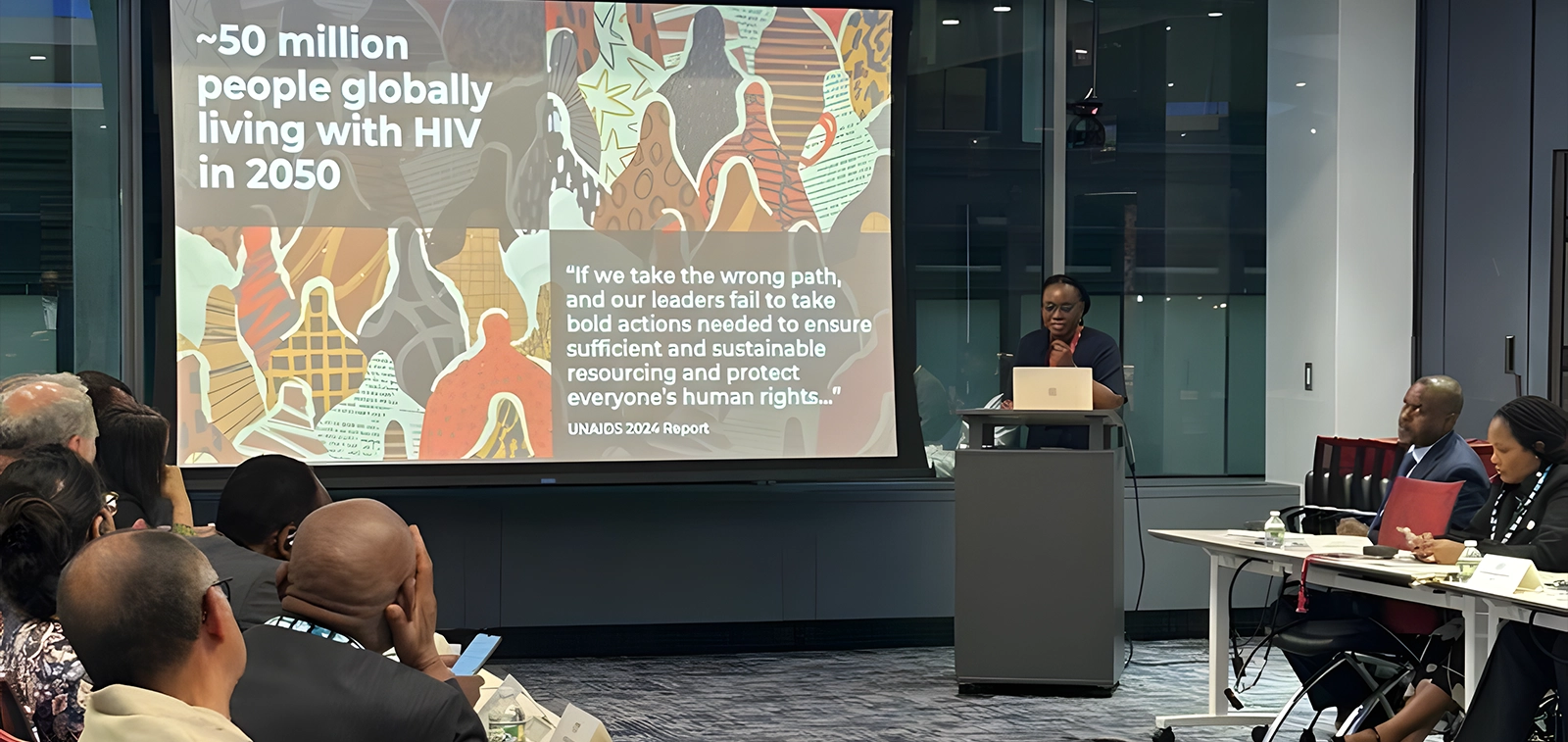
On 22 September 2024, the African-led HIV Control Working Group (HCWG) convened a high-level advocacy side event at the 79th United Nations General Assembly (UNGA) in New York. This pivotal gathering brought together African and global health leaders with the objective of advocating for Africa to take greater control of the HIV response and agenda, maintain progress, and accelerate efforts to end the endemic. Given that Africa continues to be disproportionately affected by HIV, with 67% of the world’s HIV-positive population residing in sub-Saharan Africa, African leadership in the future of the HIV response is critical.
Shifting the Narrative: Africa Takes the Lead in HIV Control
At the heart of HCWG’s agenda at UNGA79 was the call for African governments to take ownership of their HIV response. Leaders emphasised the need for self-sustaining, community-focused, evidence-based strategies reflecting Africa’s unique health challenges. They highlighted the importance of moving away from dependence on international donors and investing in strong domestic financing to build lasting HIV programmes. Furthermore, the meeting was used as an opportunity to socialise the HCWG with these high-level political stakeholders who are crucial for advancing this agenda.
“As African leaders, we must commit to sustaining the HIV response on our continent,” urged Hon. Charles Milupi, Zambia’s Minister of Infrastructure & Urban Development who was present at the meeting. “It’s imperative that we tackle competing health priorities, the growing impacts of climate change, and the burden of national debt. To do this, supporting African leadership in driving this agenda is crucial for our collective success.”
There is a dire need for locally driven and innovative financing models, with an example given of South Africa which is funding 80% of its HIV response through domestic resources. This serves as a model for other African nations, promoting financial independence and long-term resilience in the fight against HIV.
Key Messages from the HCWG Event
At the HCWG event, African leaders discussed ways to control HIV on the continent. They focused on African ownership, sustainable financing, integrating HIV services into broader health systems, and addressing gender equity. The event emphasised self-reliant solutions and successful models as captured in the following key messages:
- African Ownership and Accountability: African leaders stressed the need to prioritize HIV/AIDS as a critical public health issue and warned against complacency. They noted that reducing or stopping HIV treatment and prevention could lead to drug-resistant strains, undoing years of progress and worsening the epidemic. The HCWG emphasized that only through African ownership and accountability for health solutions can the continent protect its achievements and create a sustainable future.
- Sustainable Domestic Financing: A major point of discussion was the necessity for African nations to shift from reliance on external donors to generating their own funding for HIV programs. The HCWG supports strengthening partnerships with civil society, community organizations, and the private sector to create locally tailored solutions. South Africa’s success in funding 80% of its HIV response with domestic resources serves as a model for sustainable financing, enabling countries to address their specific challenges and build resilience against potential funding cuts from international sources.
- Integrating HIV into Universal Health Coverage (UHC): Leaders advocated for embedding HIV services within broader health systems through UHC. This integration ensures that HIV programmes not only address the epidemic but also strengthen national health infrastructures, benefiting the most vulnerable and marginalised populations. The HCWG highlighted that integrating HIV into UHC frameworks fosters a comprehensive and inclusive approach to healthcare, facilitating the seamless delivery of services that address multiple health challenges concurrently.
- Innovative Health Financing and Gender Equity: As global health funding changes, the HCWG emphasizes the need for new financing models that utilize both local and international resources. They stress the importance of elevating African voices in global health discussions to ensure the continent influences future funding strategies. Additionally, gender equity remains a major challenge in the fight against HIV, marginalised groups and key populations including young people, women and girls facing barriers to care. The HCWG advocates for the rights of these populations, highlighting that addressing gender inequalities is crucial for an effective HIV response.
“We must never confuse progress with success,” warned Ambassador Dr. John Nkengasong, U.S. Global AIDS Coordinator & Senior Bureau Official for Global Health Security and Diplomacy. “If we don’t maintain our gains, we risk going back to where we were two decades ago.” His statement highlights the HCWG’s call for ongoing vigilance in maintaining momentum. Africa’s leadership in the global HIV response will be judged by its ability to sustain and build upon its current achievements.
Collaborating with Global Health Leaders
During the UNGA79, the HCWG engaged global health stakeholders, including PEPFAR, UNAIDS, and the Global Fund, advocating for increased funding for youth-led prevention programmes and community-based health interventions. The group’s advocacy successfully pushed for the integration of HIV services into broader healthcare frameworks, making them a cornerstone of efforts to achieve universal health coverage across Africa.
The Road Ahead: Scaling Up Community-Led HIV Prevention and Care
It was emphasised that the HIV response in Africa must be community-driven and sustainable. A key advocacy point raised during the meeting was the need to address structural issues such as gender inequality, stigma, and lack of healthcare access. By tackling these root causes, African governments can reduce infection rates and ensure marginalized populations can access care.
Looking ahead, HCWG is advocating for the scaling up of effective HIV prevention interventions such as PrEP and voluntary male circumcision, which have proven successful in reducing HIV transmission in Africa. Through these advocacy efforts and enhancing collaboration with key global health stakeholders, African governments are now better positioned to lead the continent’s fight against HIV. HCWG will continue supporting this leadership to ensure that future solutions are inclusive, sustainable, and responsive to the continent’s unique challenges.